
Founder · Product · Brand · Build
Your life, remembered. A private place for the people you love.
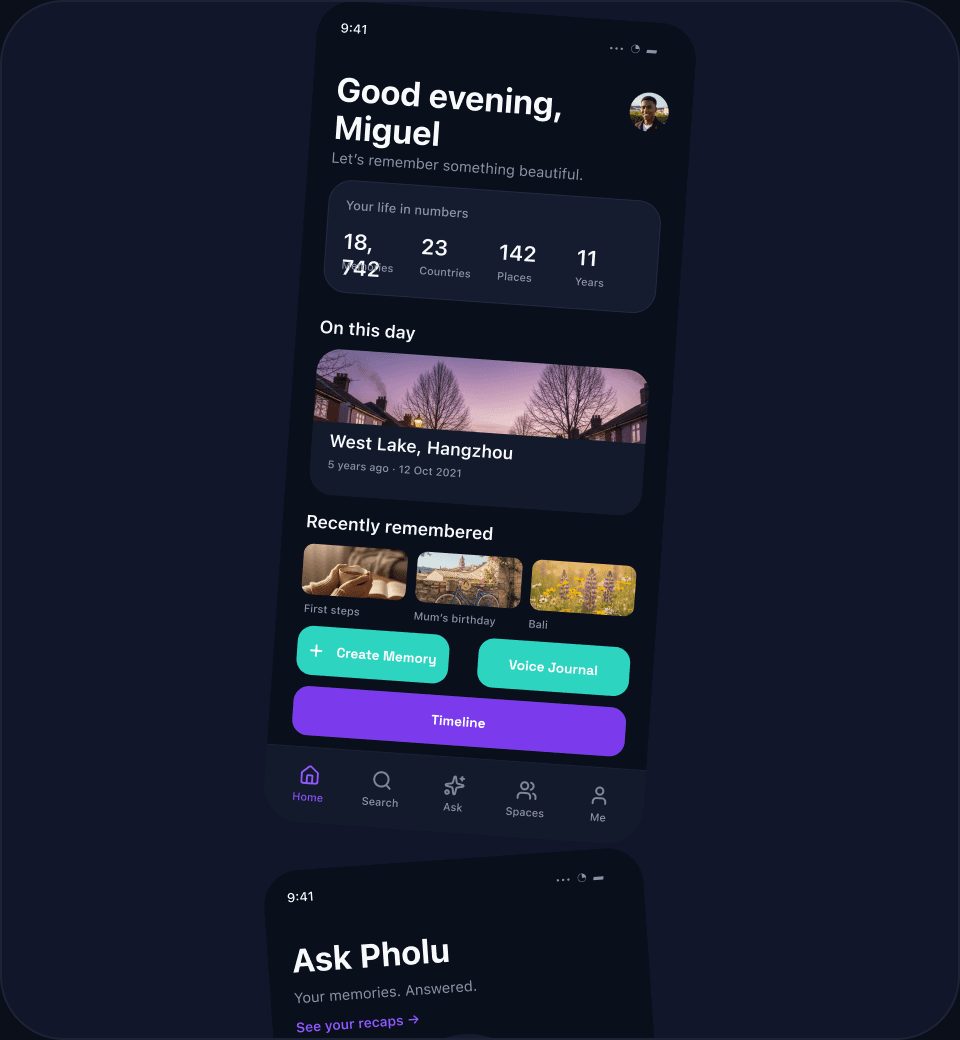
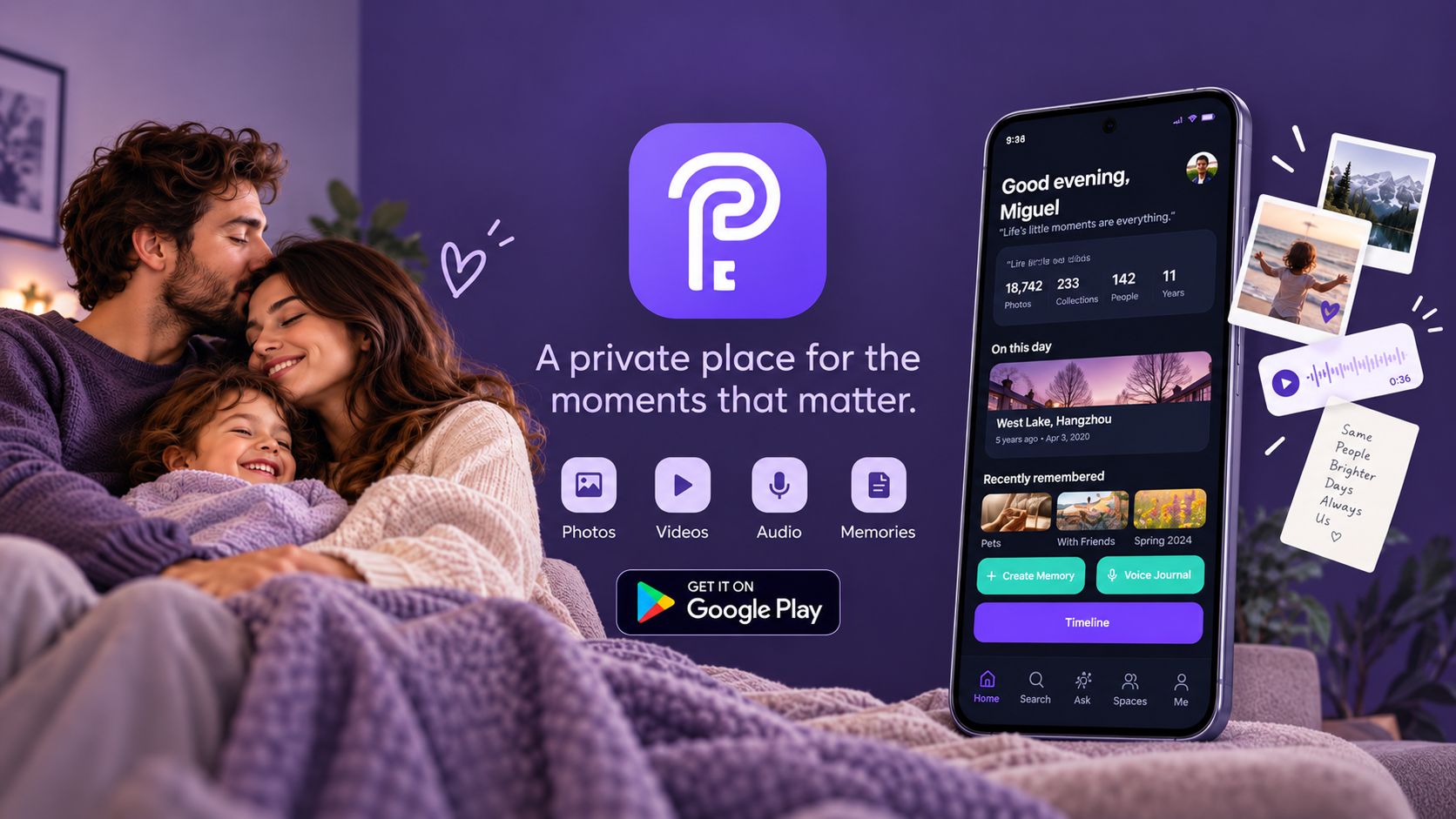
A private memory app for couples and families, designed to capture, protect and rediscover personal moments without public feeds, likes or followers. I founded it, designed the product and brand, and built the front-end.
Read the case study
- Role
- Founder · Product / Brand Front-end
- Timeline
- 2024 → Present
- Scope
- Mobile app · Brand Website · Launch
- Stack
- Figma · React Native Expo · Supabase
01 — The Problem
Our most precious memories live in apps built for strangers.
Social platforms optimise for reach. Cloud storage keeps files, not meaning. And most “private” options are a settings toggle. Families need something built differently from the ground up.
Social platforms optimise for reach. Family moments get flattened into content competing for likes, not preserved for the people who matter.
Camera rolls and drives keep files, not meaning — no people, places or context to rediscover years later.
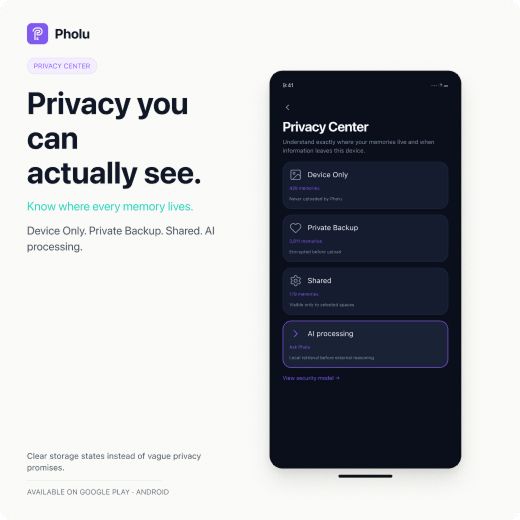
Most "private" options are a settings toggle. Families need privacy as the architecture itself — not bolted on.
“No gradients. No glow. Memory is the artwork.”
02 — Product Principles
Trust the device. Encrypt the cloud.
Index locally. Retrieve locally.
Reason selectively. Sync intentionally.
No gradients. No glow. Memory is the artwork.
03 — Process
From product structure to eight core screens.
Solo process — from problem framing and product structure through visual design, implementation and launch.
04 — Brand System
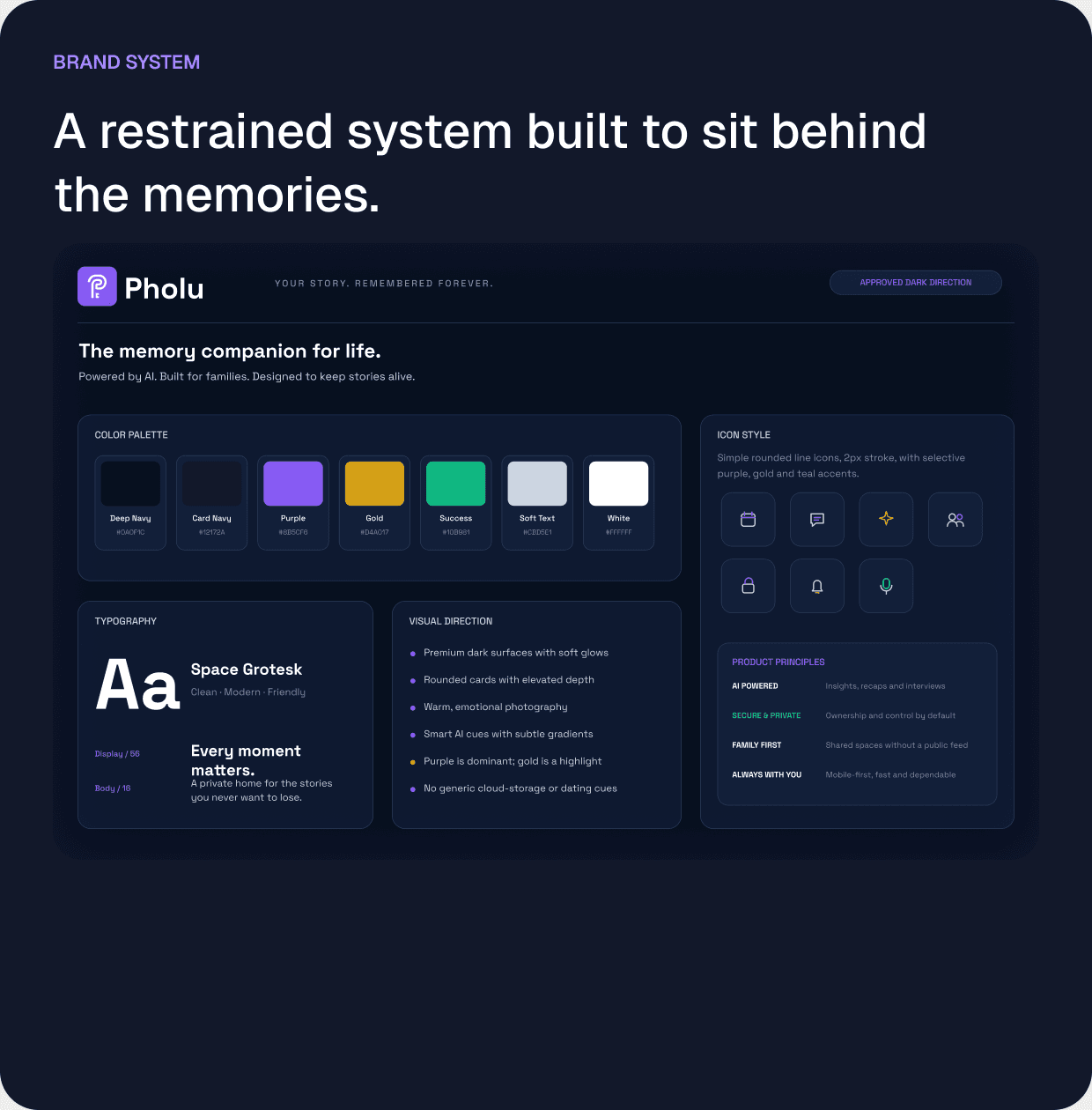
A calm, flat identity — purple leads, gold highlights.
No gradients or glow. Restraint in the UI lets photos and stories carry the emotion. The palette was built for long-term trust.
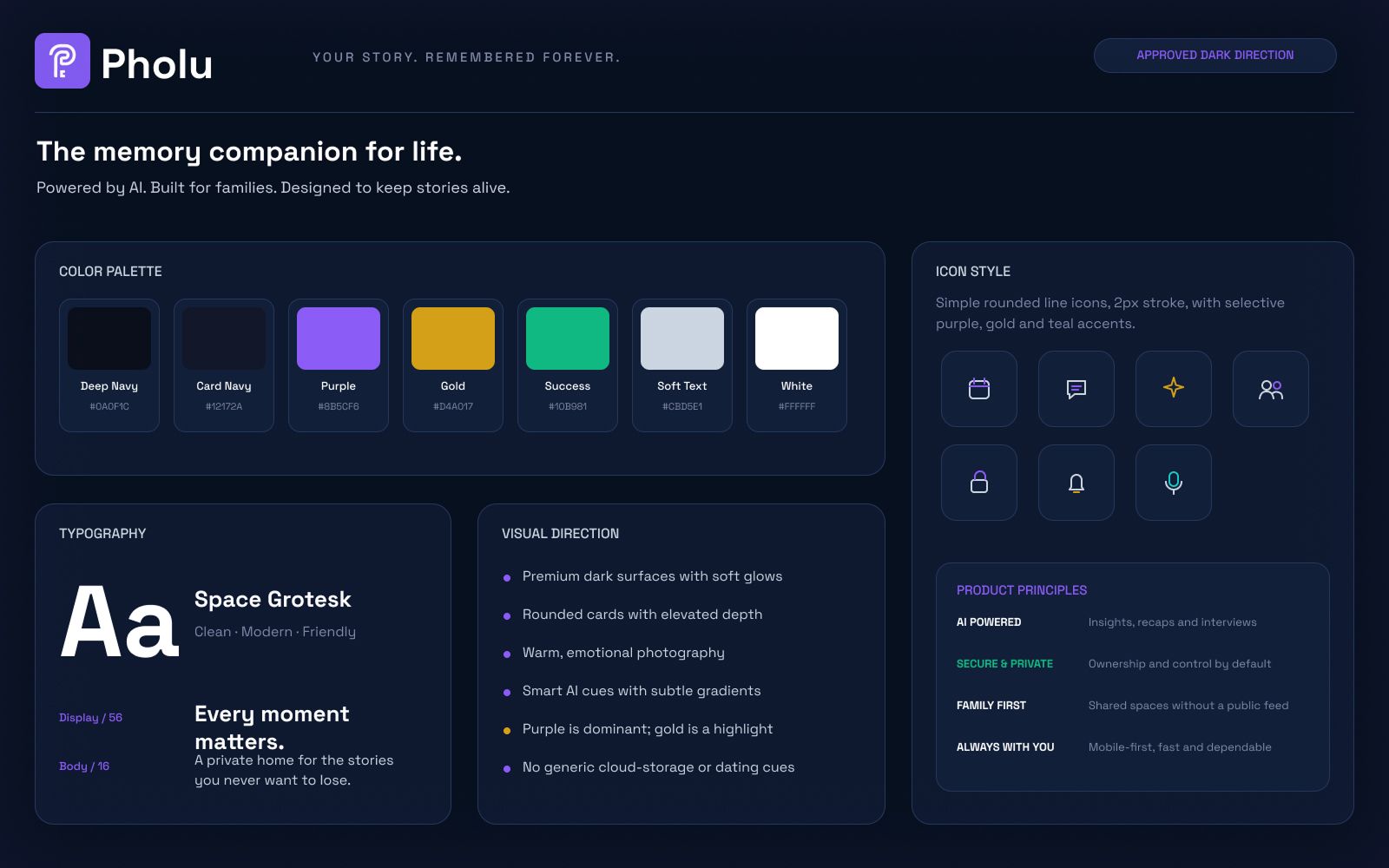
Used for hero headlines and emotional moments — warmth and personality without visual noise.
System body and UI labels — clean, legible, reliable across every breakpoint and density.
05 — Identity System
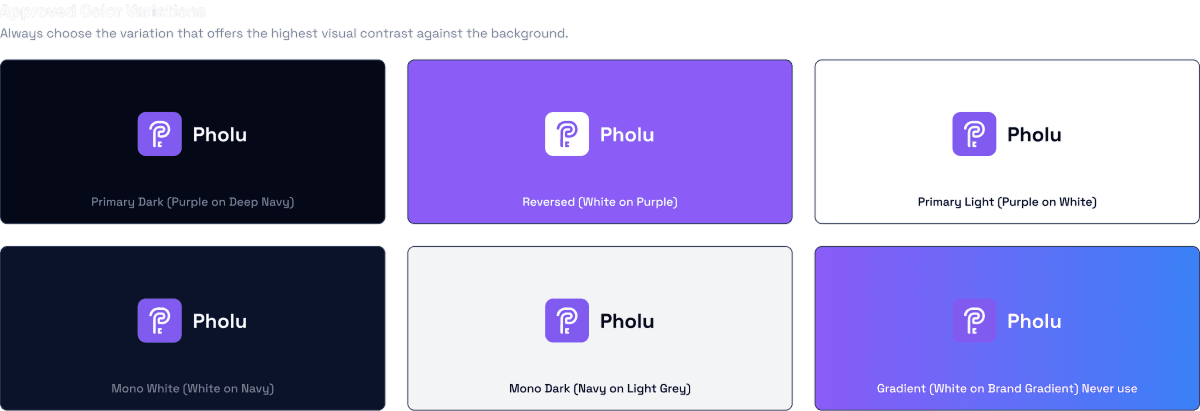
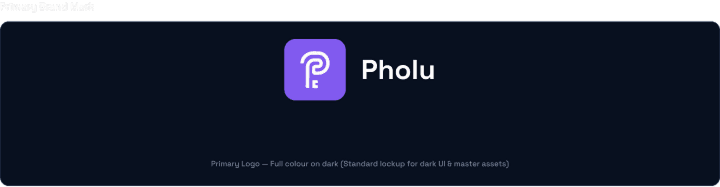
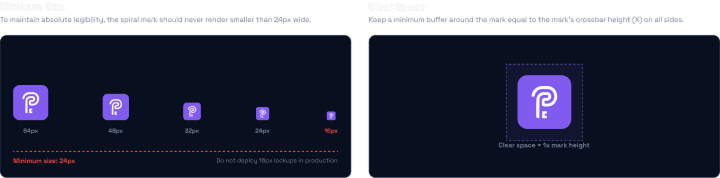
One mark, built to survive every context.
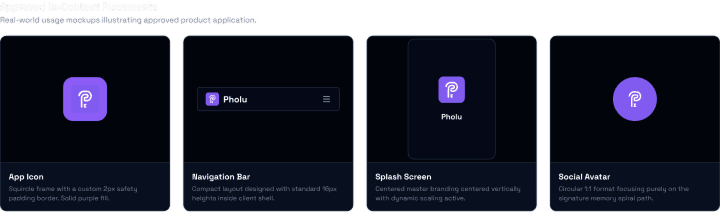
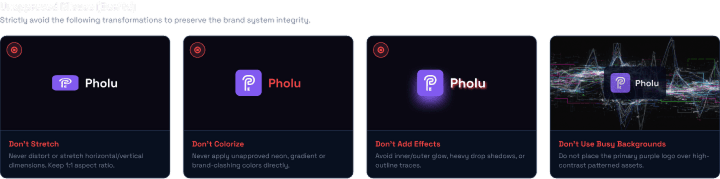
Primary, reversed, monochrome and compact variations were defined alongside spacing, misuse and application rules — turning the logo into a usable system, not a single lockup.
06 — Final Product
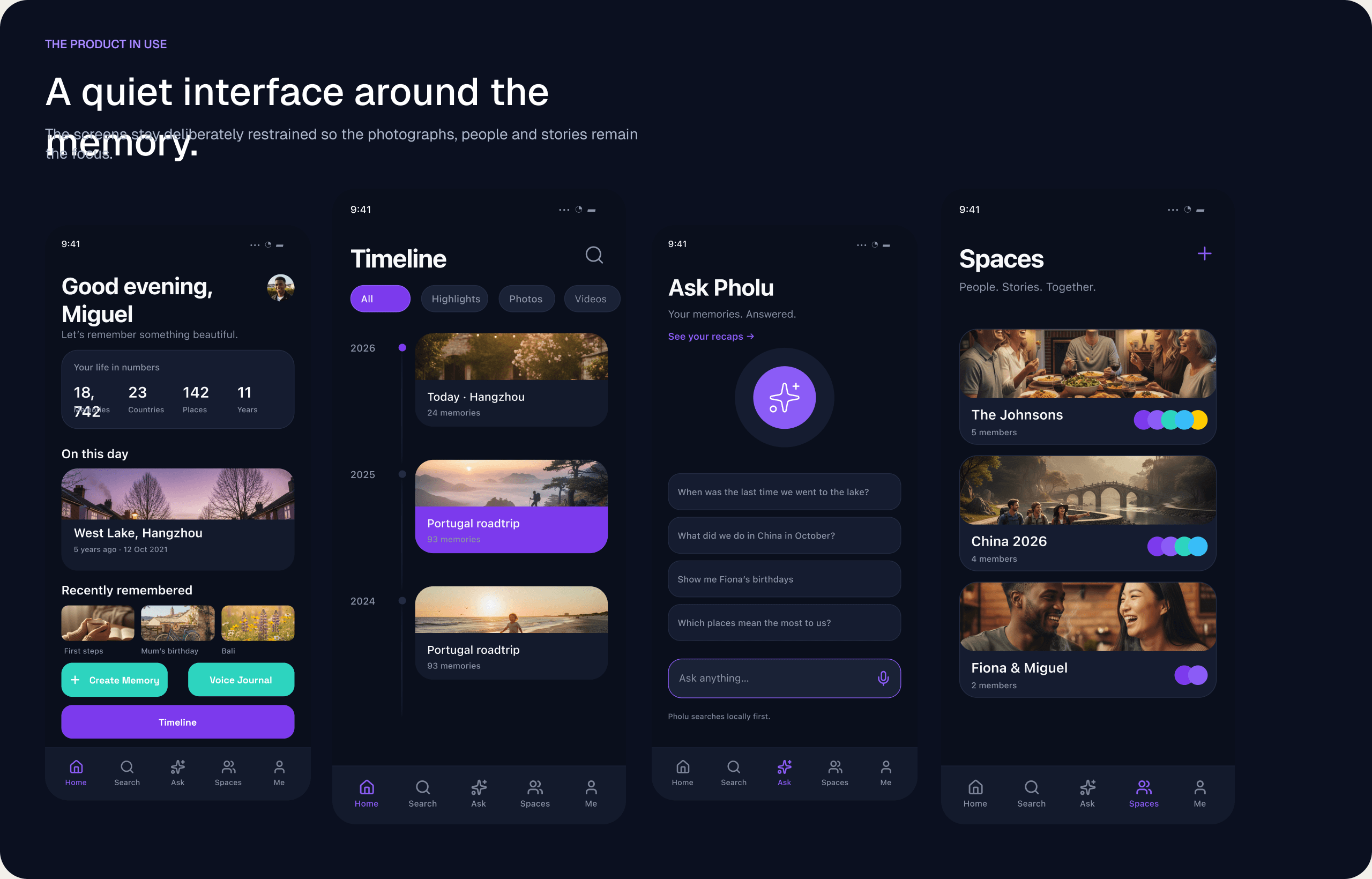
The interface should disappear behind the memory.
Eight core screens, built mobile-first in React Native / Expo. Designed independently from product structure through implementation.
07 — Interface Library
The system had to work beyond the hero screens.
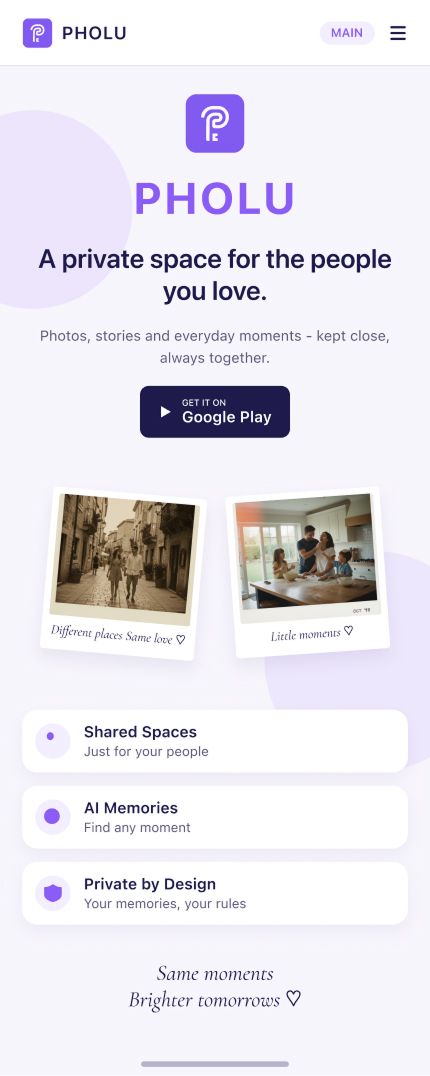
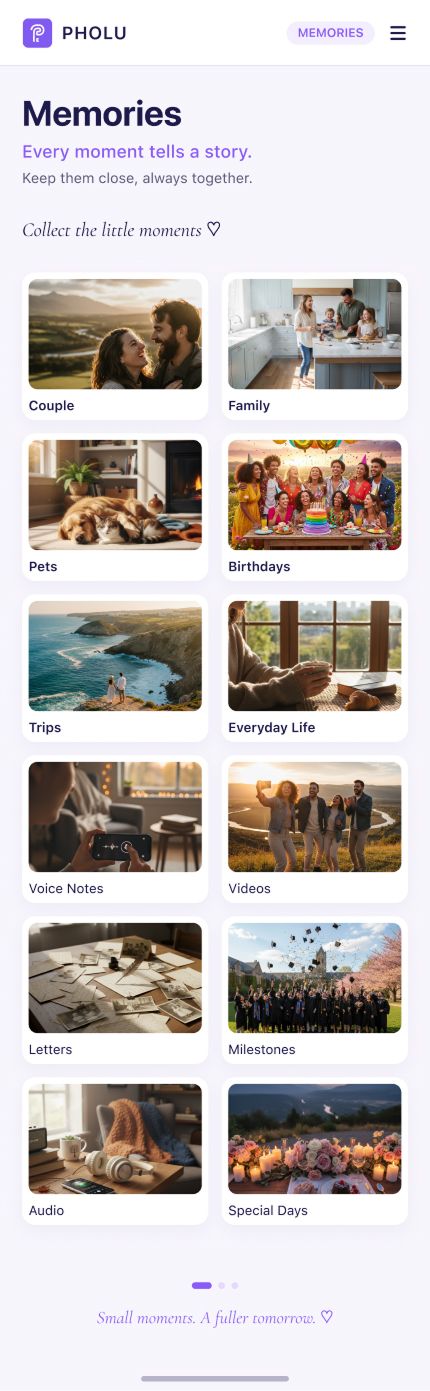
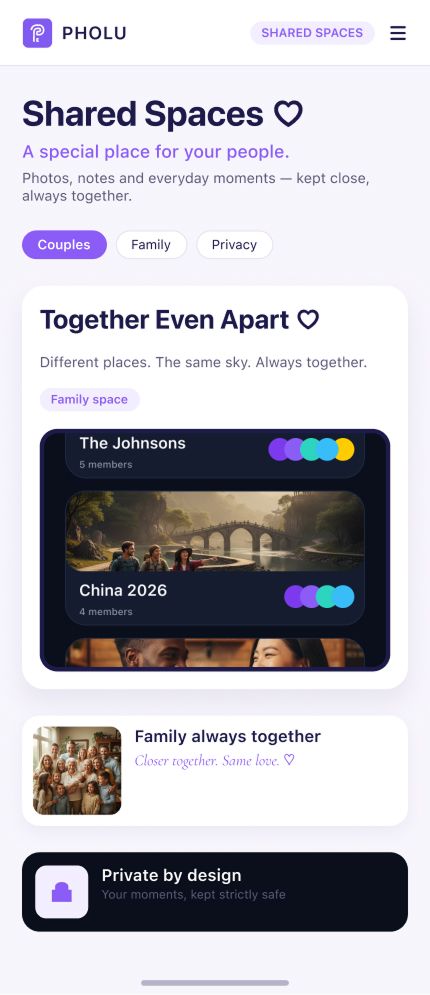
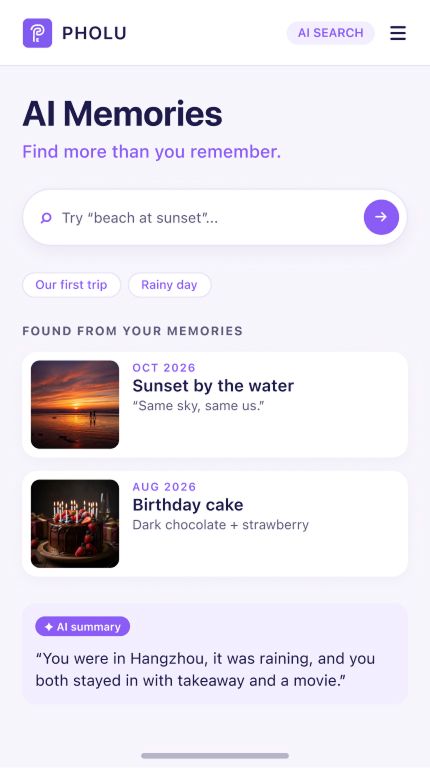
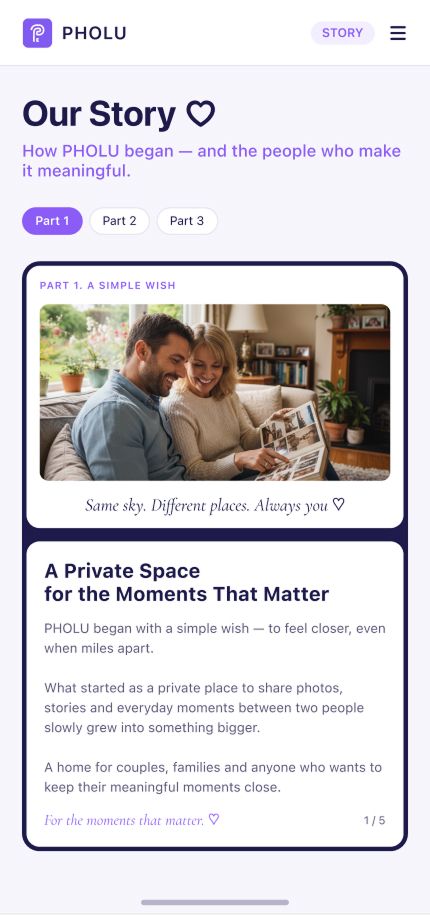
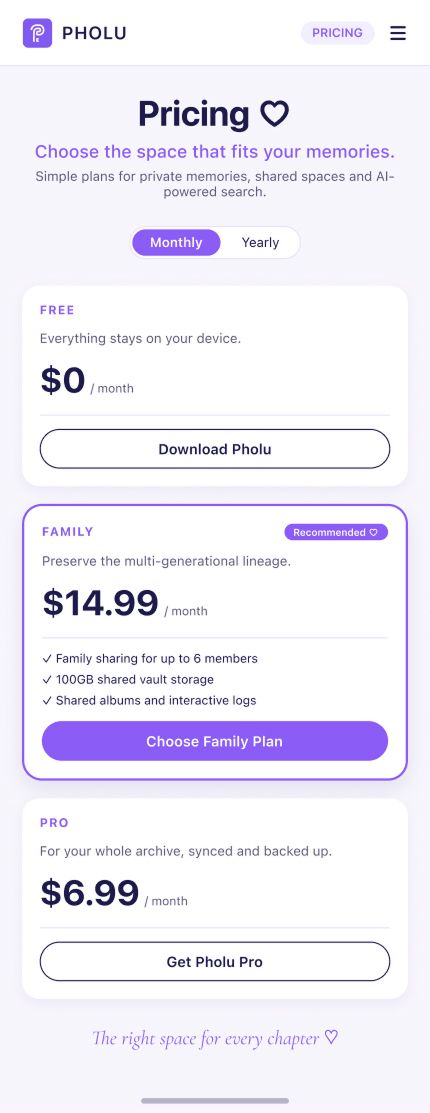
Onboarding, shared spaces, AI retrieval, memories, stories and pricing all use the same quiet visual grammar — enough structure to guide people without competing with what they saved.
08 — Launch & Communication
One product, many ways of explaining it.
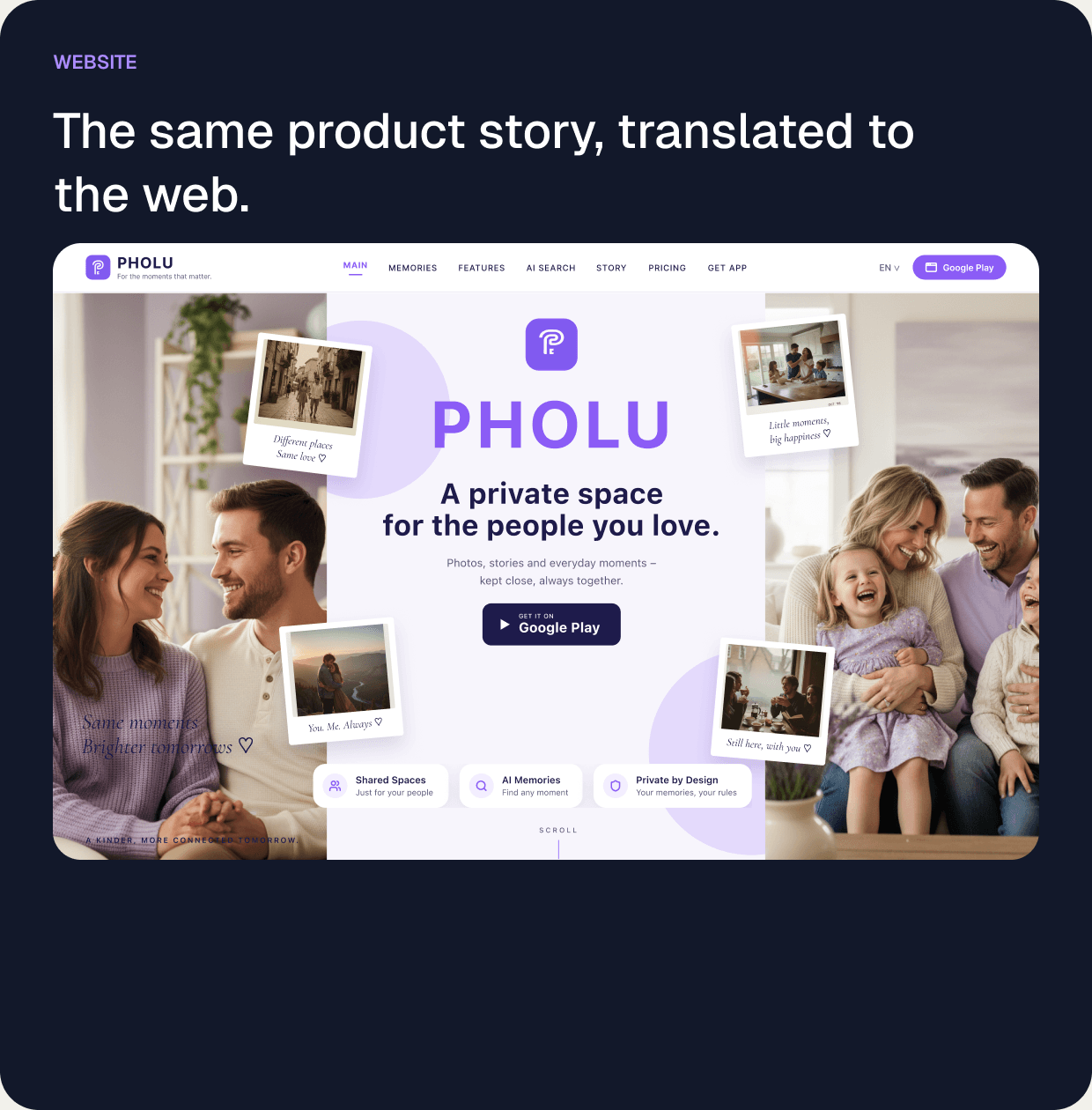
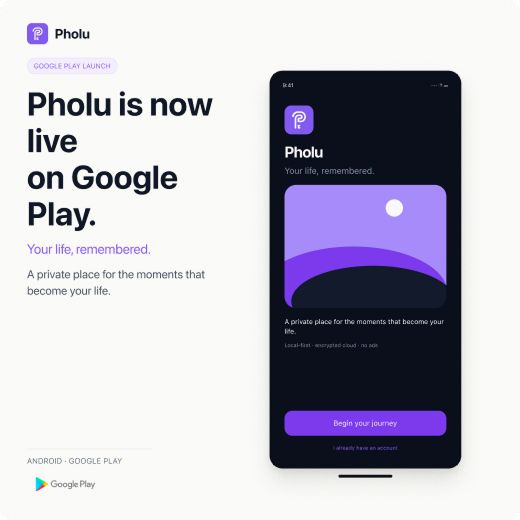
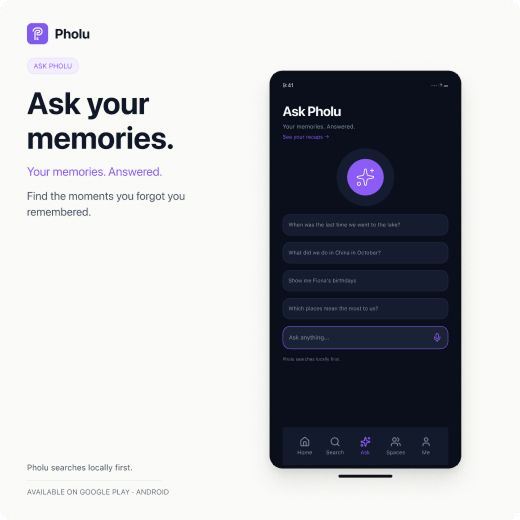
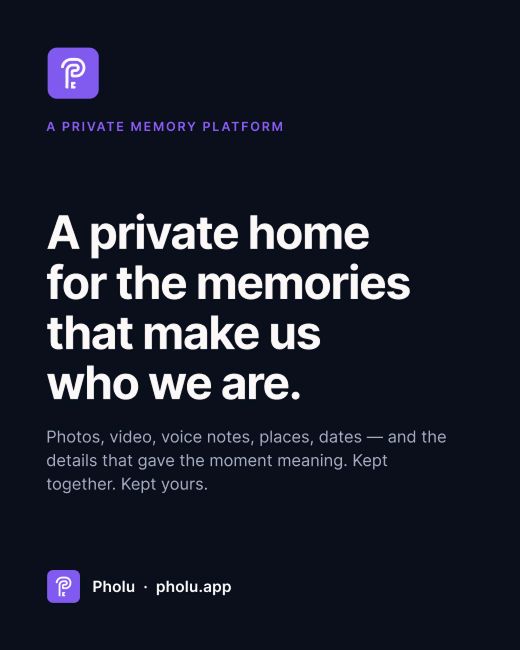
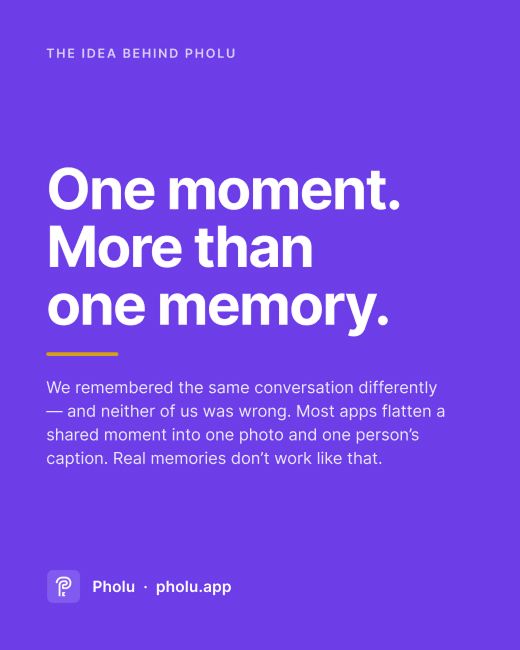
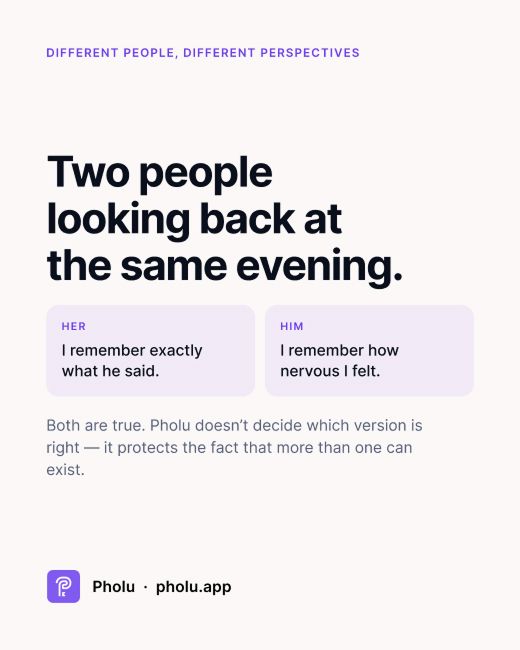
The launch system expanded across Google Play, Instagram, LinkedIn and Chinese social content while keeping the same privacy-first tone: direct, restrained and centred on real memories.
09 — Key Decisions
Three decisions that shaped the product.
Every decision pushed back against the default assumptions of social and cloud storage — deliberately.
Memories live in private Spaces — Personal, Love, Family — so sharing is always deliberate and scoped to real relationships, not broadcast.
"Ask Pholu" retrieves and summarises your own memories on request. It never ranks, recommends or performs — the AI is a quiet librarian, not an algorithm.
No gradients or glow. Restraint in the UI lets photos and stories carry the emotion — the interface is the frame, not the art.
10 — Reflection
Building my own product changed how I design.
The discipline I kept was cutting — features, colours, effects — until only the memory was left. Building as the designer meant I could make technical decisions that protected the design intent all the way to production.
Next case study →
02 / 04